
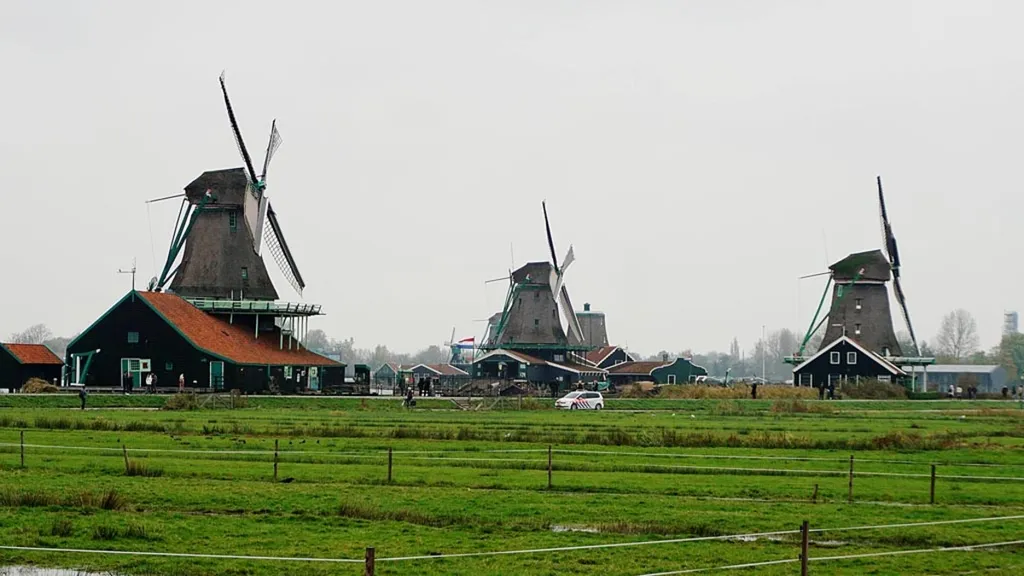
Indonesia is taking steps to modernize its agricultural sector by learning from the Netherlands, a country widely regarded as one of the world’s leaders in agricultural innovation. While Indonesia relies heavily on agriculture for food security and economic growth, the industry often struggles with low productivity, unpredictable climate patterns, and limited access to technology.
The Netherlands, despite its small land area, has become the second-largest agricultural exporter globally, thanks to its adoption of cutting-edge technologies including artificial intelligence (AI), precision farming, and automation. Recognizing this success, Indonesia is now exploring partnerships and knowledge-sharing initiatives with Dutch experts to implement similar approaches.
Officials from the Ministry of Agriculture stated that introducing AI-driven solutions could help boost food production, reduce waste, and support sustainable practices. The collaboration is seen as a crucial step in ensuring that Indonesia can meet the demands of its growing population while adapting to climate change.
How AI Is Transforming Dutch Agriculture
In the Netherlands, AI has been integrated across various aspects of farming, from crop monitoring to supply chain optimization. Smart sensors, drones, and automated greenhouses are commonly used to collect real-time data on soil conditions, weather, and plant health.
Data malaka555 processed using AI algorithms to:
-
Predict crop yields with high accuracy.
-
Detect pests and diseases early to reduce losses.
-
Optimize irrigation and fertilization to conserve resources.
-
Automate planting, harvesting, and packaging to cut labor costs.
By leveraging AI, Dutch farmers are able to produce higher yields with fewer inputs, making agriculture more efficient and environmentally friendly. These innovations are what Indonesia hopes to replicate and adapt to its own diverse agricultural landscape.
Opportunities and Challenges for Indonesia
The introduction of AI in Indonesian agriculture presents both opportunities and challenges. On one hand, AI-powered systems can help smallholder farmers access precise information about planting schedules, pest control, and weather patterns. This could significantly increase crop productivity and improve farmer incomes.
On the other hand, the challenges include high costs of technology adoption, lack of digital infrastructure in rural areas, and the need for proper training. Experts emphasize that for AI to succeed in Indonesia, the government must invest in education, internet access, and subsidies for farmers willing to adopt smart farming practices.
Despite these obstacles, pilot projects have already shown promising results. AI-based platforms have been tested in rice farming to optimize irrigation, while drones are being used to monitor palm oil plantations. These early initiatives suggest that Indonesia has the potential to scale up AI adoption in agriculture with the right policies and partnerships.
Strengthening Bilateral Cooperation Between Indonesia and the Netherlands
The collaboration between Indonesia and the Netherlands goes beyond technology transfer. Both nations are working on joint research programs, training exchanges, and public-private partnerships aimed at building a more resilient agricultural sector.
Dutch companies specializing in agri-tech have expressed interest in expanding to Indonesia, bringing expertise in greenhouse technology, hydroponics, and AI-based farm management systems. Meanwhile, Indonesian universities and research centers are collaborating with Dutch institutions to develop localized solutions suited for tropical climates and small-scale farming.
This partnership reflects Indonesia’s broader ambition to transform its agriculture into a more sustainable, technology-driven sector. By learning from the Netherlands, Indonesia is taking an important step toward ensuring food security, supporting farmers, and positioning itself as a leader in agricultural innovation within Southeast Asia.